
Meetings and Mountains
Dispatch #10
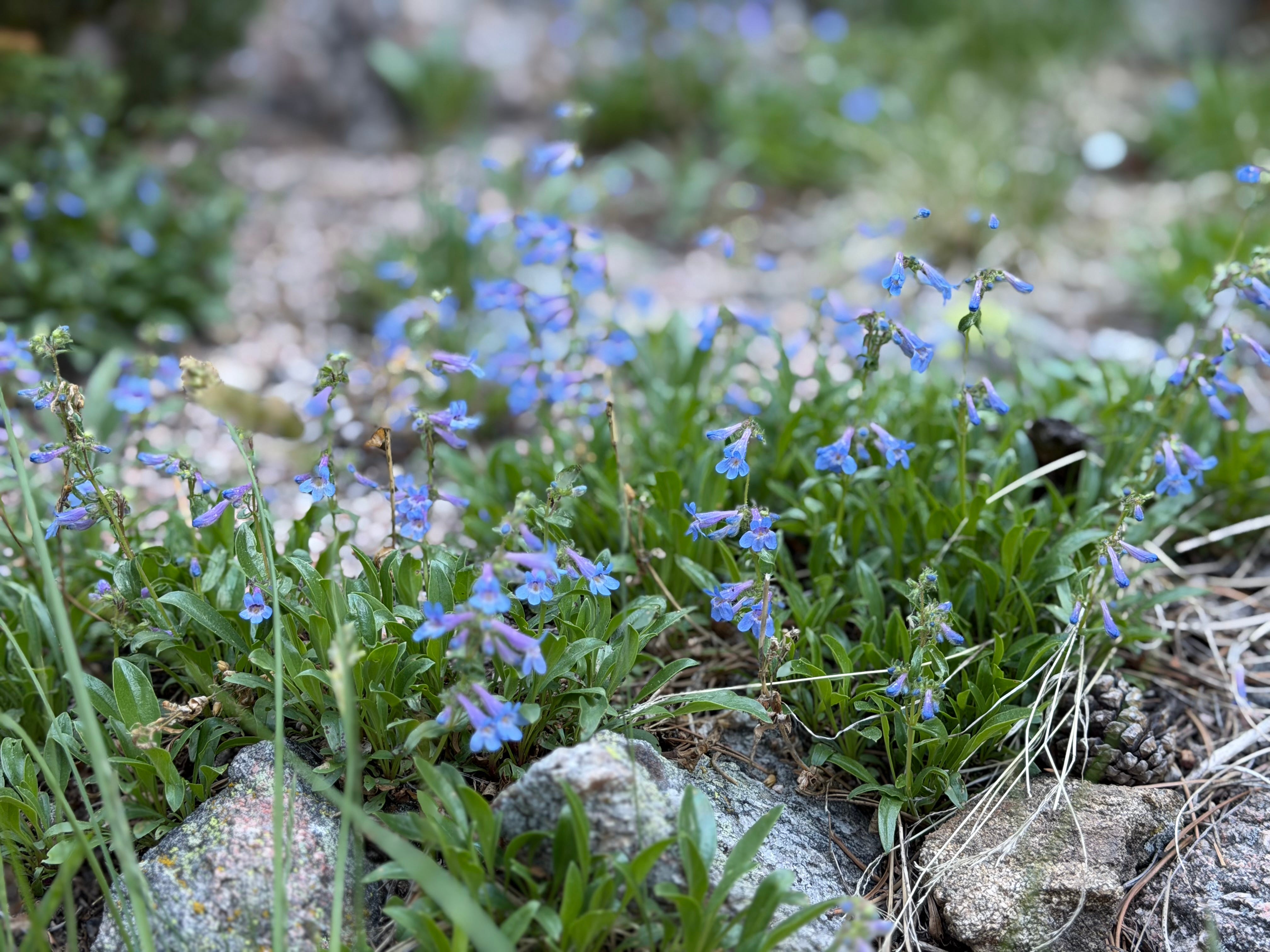
I left home in the first days of June and did not sleep in my own bed again for nearly three weeks. The month was a string of commitments in different cities, a board meeting, a memorial lecture I went to hear, a leadership program, and a keynote of my own, with a mountain or two wedged into the gaps. I love being on the road, and this was a good long stretch of it, with enough open country between the meetings to feel lucky.
What I love about travel is the new places, the landscapes most of all, and the natural history and architecture and unfamiliar ways of living that come with them. But there is a second pull, one I have written about before: some of the best hours in this work are spent talking with other scientists about the problem they are chewing on, the thing they cannot quite solve yet. This trip had plenty of both, the country between the meetings and the talk inside them.
A board meeting and a seed vault
The first stop was New York City, for a board meeting, and then a visit to the Cary Institute of Ecosystem Studies for the Ned Ames Memorial Lecture, given by Cary Fowler. Fowler is the man behind the global seed vault dug into a mountainside on Svalbard, in the Norwegian Arctic, where more than a million crop varieties are kept against the day we lose the ones we depend on. What I admire is the sheer ambition of it, and the fact that they pulled it off. He is a good storyteller with the pictures to match, and the story that stuck with me was Syria: when the regional seed bank in Aleppo was destroyed in the war, its collection was rebuilt from the backup on Svalbard. It is a hedge against food insecurity on a long horizon, and one of the few places I can think of where crop science and geopolitics end up at the same table.
A bonus of the trip was running into Drew Kramer, a friend and longtime collaborator, and his wife, the ceramicist Jorie Berman, who were visiting Cary at the same time. We got to catch up, which does not happen nearly often enough.
Cary is full of people I like talking to, and I got some unhurried time with several of them: Jane Lucas, Evan Gora, Tara Stewart Merrill, and Rick Ostfeld. The conversation wandered from measuring nutrient fluxes to mapping forests to what keeps Lyme disease going in a landscape, which is exactly the kind of talk I go to these things for.
I also got out of the city for a day of hiking with my friend Rob Peck, up in the Ramapo Valley across the line in New Jersey, out to Bear Lake and back, a good antidote to a run of days spent indoors around a table.
One of the pleasures of New York is the eating. I had dinner at Cecchi’s, in the West Village, and met its owner, Michael Cecchi-Azzolina, who spent a career running the front of the room at some of the city’s better-known restaurants and wrote a sharp, funny book about it, Your Table Is Ready: Tales of a New York City Maître D’. Good company, and a fine dinner.

On another evening I saw Operation Mincemeat on Broadway, the improbably funny musical about the World War II plot to plant false invasion plans on a corpse and float it ashore in Spain to mislead the Germans about Sicily. Five actors, a great deal of nerve, and a great night at the theatre. (Times Square, on the way in, was its usual self, day or night.)


Boston, and a program worth finishing
From New York I went to Boston for the Institute for Management and Leadership in Education, a program run out of the Harvard Graduate School of Education for people who have somehow ended up running things at universities (or think they might like to). It was as good as I had hoped, equal parts case study and conversation. I came out wanting to finish the whole certificate, and with a longer view of the job than I went in with.
I stayed in Back Bay, in the apartment of my friend Scott Cunningham, an economist who writes the Causal Inference newsletter and thinks harder than almost anyone I know about how we know what causes what. He was traveling; I got the apartment and a standing invitation to argue about identification strategies whenever our paths next cross.
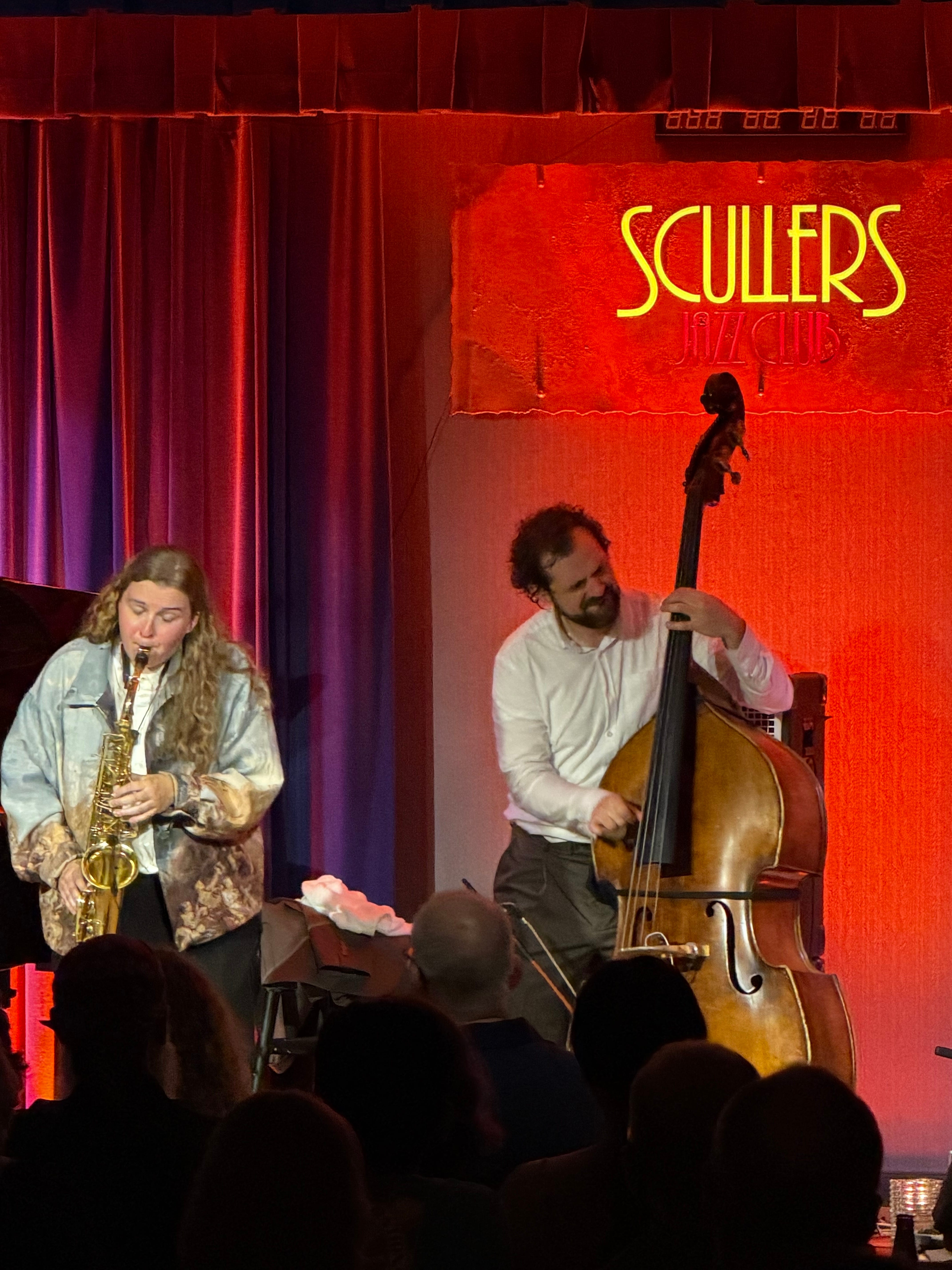
One night I heard the saxophonist Sarah Hanahan at Scullers, the jazz club out on the river. She is young and very good, and I’m glad I went.
Another afternoon I got out on Boston Harbor aboard the Adirondack III, a two-masted pilot schooner that Classic Harbor Line sails from the waterfront, eighty feet of teak and varnished mahogany under a couple thousand square feet of sail. There are worse ways to close out a week of case studies than under canvas.

The whole city, meanwhile, was in a froth over the World Cup. I was there in the days before Scotland opened its tournament against Haiti out at Foxborough, and the Tartan Army had arrived well ahead of the match, kilts and bagpipes on every other corner. By some accounts the bars very nearly ran dry. Scotland won that one, 1-0, their first World Cup victory since 1990, though by then I was already on my way to Colorado.
Fort Collins: infectious disease meets evolutionary demography
The keynote was for the Evolutionary Demography Society, in Fort Collins, where I also chaired a session. My talk, “Age, agency, and epidemics: linking psychological variation, behavioral heterogeneity, and transmission”, made the case that who takes risks, who complies, and who changes their behavior during an outbreak varies systematically with age and psychology, and that this heterogeneity belongs inside our models of transmission rather than outside them. (The slides are online, along with a PDF.)

I found myself in a group discussion about how little the field of evolutionary demography, which studies how birth and death rates shape the trajectories of populations, currently engages with infectious disease. The connection is not subtle. Epidemics are demographic events, and the demography of a host population shapes what an epidemic can do. Both are also highly susceptible to natural selection. There is real interest on both sides, and my sense is that the society would welcome more epidemiologists in the room. I would like to help make that happen.
Long’s Peak
After Fort Collins I stayed on in the mountains for a few days, one night in an old lodge cabin done up in the full rustic cliché, and climbed Long’s Peak by Lamb Slide and the Kiener’s Route, a line that goes up a snow couloir and then onto exposed rock high on the east face. We started the approach at half past two in the morning, by headlamp, to reach the technical ground by first light, and caught the sun coming onto the Diamond, the sheer wall above Chasm Lake, just as I got there. It is a serious outing, more committing than the goat-encounter hike I wrote about last month, and one of the most fun days I have ever had in the mountains.


I made a couple of other outings from Estes Park in the same stretch: up Twin Sisters, where the wildflowers were extraordinary and the summit lays the whole east face of Long’s out across the valley, and a gentler walk up to Emerald Lake in Rocky Mountain National Park.


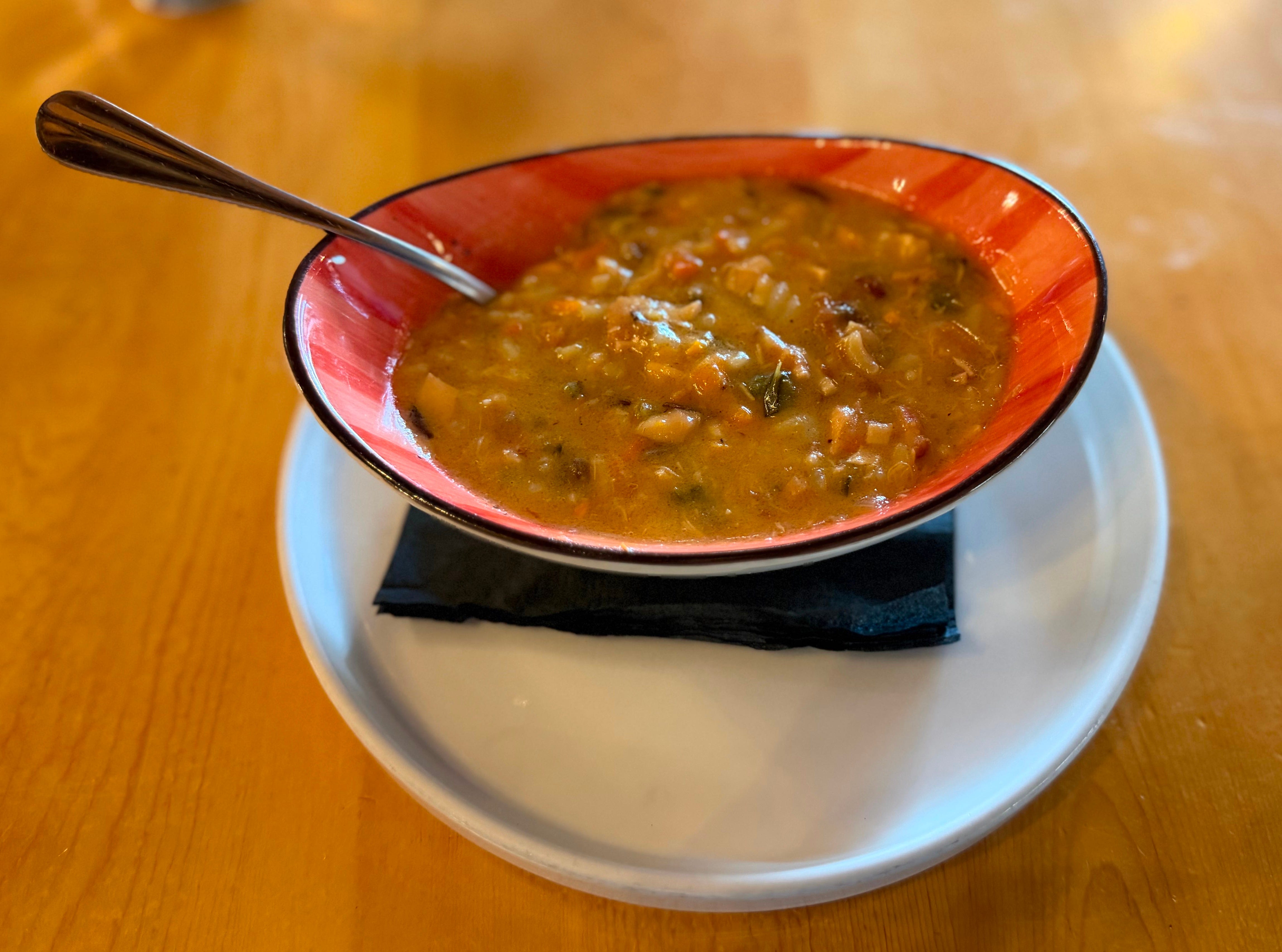
On the way out I stopped at Bird & Jim in Estes Park and had the smoked pheasant chowder, which I recommend without reservation to anyone who has just spent a long day above 13,000 feet.
On artificial intelligence
Three of the things I wrote or placed this month were, one way or another, about artificial intelligence and the work of scholarship.
The one that got the most response was a short editorial in Ecology Letters, “AI, comparative advantage, and the next decade of ecological research.” It seems to have struck a nerve. I have had a stream of email about it and a lively thread of comments on LinkedIn. The argument, briefly, is that the value of what ecologists do will migrate toward the things we hold a comparative advantage in as these tools improve, and that we should be thinking now about what those things are.
I also finished the essay on AI disclosure I mentioned last month and submitted it, under the title “Who Stands Behind the Paper? The Case Against AI Disclosure Statements,” to the Journal of Scholarly Publishing. I set out expecting to build a careful taxonomy of when AI use should be disclosed, and the taxonomy came apart in my hands (on Scotchman Peak, as it happens, the same trip as last month’s goats). The argument I ended with is that the disclosure debate runs together three separate questions: who deserves credit, who is responsible, and how the work was made. A language model earns no credit and bears no responsibility, and a human author vouches for every claim. The essay explores a screening off principle: once responsibility for a claim is fixed, how the sentences were actually composed is screened off, the same way we never ask which colleague suggested a reference or which reviewer rewrote a line. Where a tool bears on the validity of a result, it already belongs in the methods. The disclosure statement is left with nothing to do, and its costs fall hardest on non-native writers of English. We will see what the reviewers make of it.
The third was a short letter in Science on generative AI and what a university degree should certify, which picks up a thread from a Forbes column in May on AI use and cheating on campus.
All three come back to the same conviction. AI is going to change scholarly life, and not only scholarly life: knowledge work broadly, and even the ordinary daily business of finding something out. There are real problems to work through, the ethics, the norms shifting under us, the environmental cost, and I do not wave any of them away. But I think our job as intellectuals is to dive in anyway, to take the thing at face value and engage with it honestly, open-minded about what it turns out to be. That is what I am trying to do when I write about it.
Out the door
A cluster of work from the Ethiopia collaboration moved this month. With Amira Roess, Marlene Müller, and colleagues, we submitted two MERS papers, one on camel-to-human transmission of MERS-CoV and its links to camel production sites on the Arabian Peninsula, and one on MERS-CoV seroprevalence in people in Ethiopia. And our paper on diet, social relations, political insecurity, and zoonotic disease risk in Ethiopia’s pastoralist regions came back with an invitation to revise and resubmit, which is the good kind of bad news. With luck it will be accepted before long.
✍️ Recent Columns
Five Forbes pieces in June.
Anthropic’s new AI workbench mapped my field for $26. Now imagine it aimed at the rest of science (June 30) — What happened when I turned a new AI research tool loose on my own corner of ecology, and what it suggests about where the rest of science is headed.
A drug-resistant fungus is spreading through American hospitals (June 30) — Candida auris continues its quiet move through healthcare settings, and why a fungus is harder to fight than a bacterium.
Ebola has passed 1,000 cases. This outbreak is different from any before (June 24) — An update on the outbreak I have been following since May, now past a grim milestone, and what makes this one unlike its predecessors.
Australia was the last continent without this bird flu. A dead skua just changed that (June 21) — H5N1 reaches the one continent it had not, carried, as it turns out, by a seabird.
Summer brings people and bears together. A warming climate is reshaping the calendar (June 13) — Warmer seasons are shifting when and where people and bears cross paths. Timely, given the rest of my month.
🔬 Nerdy Corner
A paper well off my usual beat, and an old method finding new users.
Stochastic game dynamics in tumor metabolism (Journal of Physics: Complexity, in press) — With Sukanta Sarkar, Smita Deb, and Partha Sarathi Dutta, and a departure from infectious disease. A tumor holds cells running different metabolic strategies, oxygenated and hypoxic, that trade resources in a kind of metabolic symbiosis, and that interaction can be written as an evolutionary game. Add intrinsic noise, the randomness any finite population of cells is subject to, and the noise alone can flip the system from a dominance game, in which one strategy wins out, to a coordination game, in which the two settle into coexistence, as a parameter we call the metabolic exploration rate rises. The flip happens at a tipping point, and the early warning signals I have spent years chasing in ecosystems and epidemics, the statistical signature of critical slowing down, seem to anticipate it here too. The distant hope is that such signals might one day help time a therapy that decouples a tumor’s metabolism before it runs away.
Range bagging (Journal of the Royal Society Interface, 2015) — An old method of mine, still earning its keep. It estimates a species’ environmental niche from presence-only data when records are thin. I was glad to hear from a group at the University of Melbourne’s Centre of Excellence for Biosecurity Risk Analysis, who wrote to say range bagging has become the presence-only method they now recommend over the alternatives. They value that its bootstrapping framework handles sampling bias and the uncertainty in which covariates to use while asking fewer assumptions than a method like MaxEnt, which matters for invasive species, where occurrence records tend to be sparse, geographically skewed, and far from equilibrium. They have built it into an R package, bssdm, and into Biosecurity Commons, an open platform that government agencies, industry, and researchers use to gauge the climatic suitability of incoming biosecurity threats. It is a strange thing to learn that a method I published ten years ago is quietly helping keep pests off a continent. Some of these small-sample methods are also now packaged in a new R library, S4DM, built with Brian Maitner, Rachel Richards, Ben Carlson, and Cory Merow.
Home now. There is more travel on the July calendar already, but for a few weeks I am glad to sit still, with the mountains behind me and Georgia settling into the deep heat of summer.
— John